The gaming community has never been more divided than it is today over a seemingly simple question: should games be hard? This debate has evolved from casual forum arguments into a full-blown cultural war, with battle lines drawn not just between different gaming philosophies, but between entire generations of players. What started as discussions about difficulty settings has morphed into something far more complex—a clash of values, experiences, and fundamental beliefs about what gaming should be.
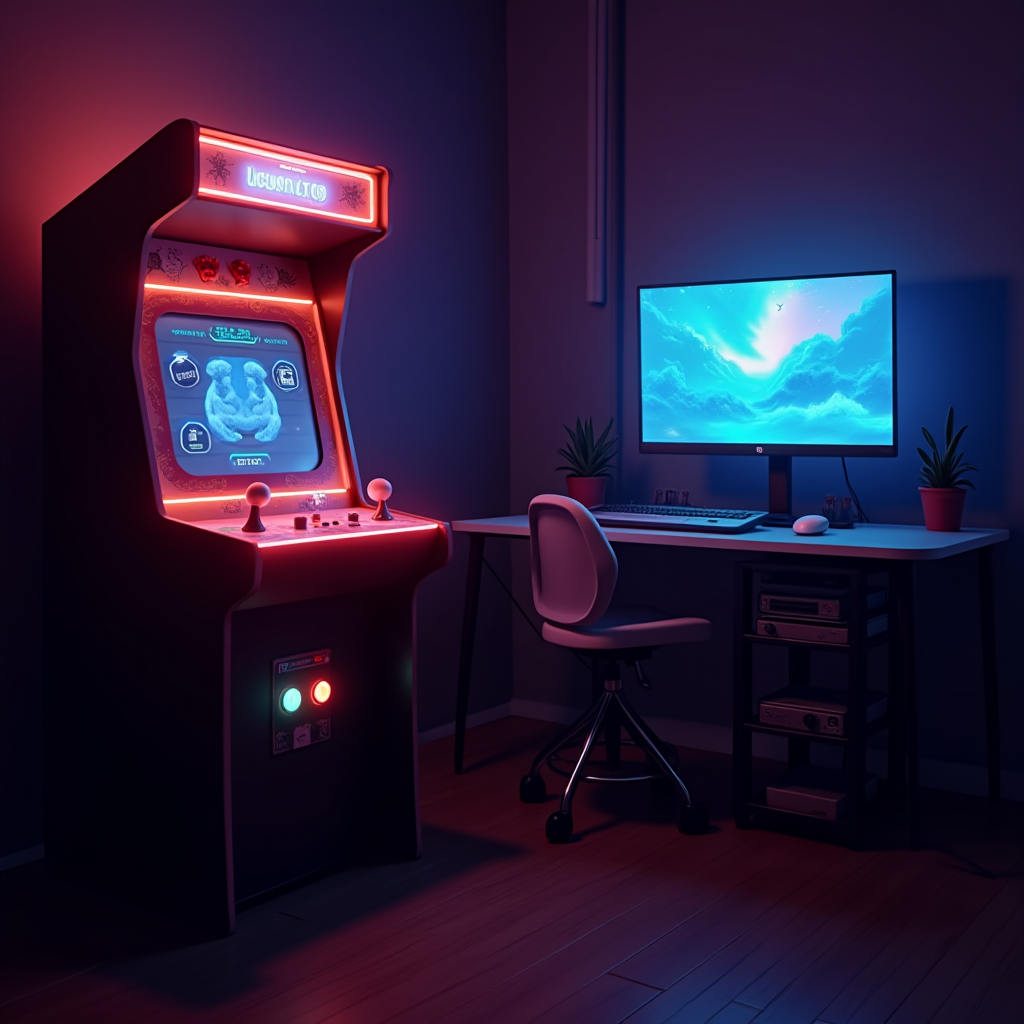
To understand this divide, we need to journey back to the origins of gaming itself, where the seeds of this conflict were first planted in the dimly lit arcades of the 1980s and 1990s. The generational differences in gaming we see today aren't arbitrary—they're the result of fundamentally different formative experiences that shaped how each generation approaches interactive entertainment.
The Quarter-Eating Era: How Arcade Economics Shaped Gen X Gaming
For Gen X gamers and older millennials, difficulty wasn't just a design choice—it was a business model. The arcade era operated on a simple principle: the harder the game, the more quarters players would pump into machines. Games like Ghosts 'n Goblins, Contra, and Battletoads weren't just challenging; they were deliberately punishing, designed to extract maximum revenue from minimum playtime.

This economic reality created a generation of gamers who internalized difficulty as a core component of the gaming experience. Beating a notoriously hard game wasn't just an achievement—it was a badge of honor, proof of dedication and skill. The phrase "Nintendo Hard" became part of gaming lexicon, describing games that seemed almost impossibly difficult by modern standards.
The Psychology of Earned Victory: Gen X gamers developed what psychologists call "mastery orientation"—a mindset where the value of an achievement is directly proportional to its difficulty. This wasn't just about bragging rights; it was about the genuine satisfaction that came from overcoming seemingly insurmountable odds. When you finally beat Mike Tyson in Punch-Out!! after hundreds of attempts, that victory meant something precisely because it was so hard-won.
The home console era of the late 80s and early 90s continued this tradition. Without the ability to patch games post-release, developers had to ensure their games lasted. The solution? Make them brutally difficult. Limited lives, no save points, instant-death mechanics—these weren't bugs, they were features designed to extend gameplay time and justify the $50-60 price tag.
The Cultural Context of "Git Gud"
The famous Dark Souls mantra "git gud" (get good) perfectly encapsulates the Gen X gaming philosophy. It's not meant to be dismissive or elitist—it's a reflection of how this generation learned to play games. There were no difficulty settings, no accessibility options, no hand-holding tutorials. You either learned through repeated failure or you didn't progress. This created a culture where struggling was expected, failure was normalized, and persistence was the only path to success.
The Shift: How Millennials Bridged Two Gaming Worlds
Millennials occupy a unique position in this generational conflict. Older millennials grew up with the tail end of arcade culture and the NES/SNES era, while younger millennials came of age during the PlayStation and Xbox revolution. This generation witnessed gaming's transformation from niche hobby to mainstream entertainment, and their gaming habits reflect this transition.
The late 90s and early 2000s saw a gradual shift in game design philosophy. Developers began implementing difficulty settings, save systems became more forgiving, and tutorials became standard. Games like The Legend of Zelda: Ocarina of Time introduced Navi, a companion who would offer hints and guidance—something that would have been unthinkable in earlier eras.
This generation developed a more pragmatic approach to gaming difficulty. Having experienced both the punishing games of their youth and the more accessible titles of their teenage years, millennials tend to view difficulty as a tool rather than a defining characteristic. They're comfortable with the idea that different players might want different experiences from the same game.
Gen Z and the Accessibility Revolution
Enter Gen Z, a generation that grew up in an era where gaming had already become mainstream and inclusive design was gaining traction. For these gamers, the idea that a game should be deliberately inaccessible or punishing seems not just outdated, but actively hostile. They've grown up with YouTube walkthroughs, Twitch streams, and a culture that values experiencing stories and worlds over proving skill.

The Last of Us Part II became a watershed moment in this generational debate. Naughty Dog included over 60 accessibility options, allowing players to customize everything from combat difficulty to visual aids. While many praised this as progressive and inclusive, others argued it diluted the intended experience. The debate that followed perfectly illustrated the generational divide in gaming preferences.
Gen Z gamers have fundamentally different priorities. They value narrative experience, social connectivity, and creative expression over pure mechanical challenge. This isn't because they're "worse" at games—many Gen Z players are incredibly skilled—but because they see games as a medium for diverse experiences rather than primarily as tests of skill.
The Mobile Gaming Factor
Gen Z's relationship with mobile gaming has also shaped their expectations. Growing up with smartphones, they've experienced gaming as something casual, accessible, and integrated into daily life. Mobile games typically feature adjustable difficulty, generous checkpoints, and systems designed to accommodate short play sessions. This has influenced their expectations for all gaming experiences.
The Cultural Context: Why This Matters Beyond Gaming
The difficulty debate isn't happening in a vacuum—it reflects broader generational differences in how we approach challenges, failure, and achievement. Gen X grew up in an era that emphasized individual achievement and "tough love" parenting. Millennials experienced the beginning of the self-esteem movement and participation trophies. Gen Z has grown up in an era emphasizing mental health, inclusivity, and the recognition that different people have different needs and abilities.
These different cultural contexts have created fundamentally different relationships with failure and challenge. For Gen X, failure in games was just part of the experience—you died, you tried again, you got better. For Gen Z, unnecessary failure can feel like poor design rather than a feature. They ask: "Why should I have to replay the same section 50 times when I could be experiencing new content?"
The Neuroscience of Challenge: Research shows that different generations may actually process gaming challenges differently. Older gamers who grew up with difficult games developed neural pathways associated with persistence and pattern recognition. Younger gamers, exposed to more varied gaming experiences, may have developed different cognitive strategies that prioritize efficiency and resource optimization over pure trial-and-error learning.
The Developer's Dilemma: Balancing Tradition and Accessibility
Game developers find themselves caught in the middle of this generational conflict. How do you create a game that satisfies both the Gen X player who wants a punishing challenge and the Gen Z player who wants to experience the story without frustration? The industry has developed several approaches, each with its own strengths and controversies.
The most common solution is difficulty settings, but even this has become contentious. Some developers, like FromSoftware with their Souls games, have refused to implement difficulty options, arguing that the challenge is integral to the experience. Others, like Naughty Dog and Insomniac, have embraced extensive accessibility options, allowing players to customize their experience down to minute details.

The Assist Mode Compromise
Some games have implemented "assist modes" or "story modes" that allow players to experience the game with reduced challenge. Celeste, a notoriously difficult platformer, included an assist mode that let players adjust game speed, grant invincibility, or skip sections entirely. Importantly, the game never shamed players for using these options, treating them as legitimate ways to experience the game.
This approach has been praised by accessibility advocates but criticized by some traditional gamers who argue it undermines the intended experience. The debate often centers on whether a game's difficulty is an artistic choice that should be respected or a barrier that should be removed.
The Economics of Difficulty: How Business Shapes Design
The generational divide over difficulty isn't just cultural—it's economic. Modern game development is expensive, with AAA titles costing hundreds of millions of dollars to produce. Publishers need to reach the widest possible audience to recoup these investments, which means making games accessible to players of all skill levels.
This economic reality conflicts with the desires of hardcore gamers who want challenging experiences. The result is a market increasingly segmented by difficulty preferences. We see this in the success of indie games like Hollow Knight and Cuphead, which cater to players seeking old-school challenge, alongside mainstream hits like Spider-Man and Horizon that offer extensive difficulty customization.
Finding Common Ground: What Both Sides Get Right
Despite the heated debates, both perspectives on gaming difficulty have merit. Gen X gamers are right that overcoming difficult challenges can be deeply satisfying and that some experiences are enhanced by their difficulty. The sense of accomplishment from beating a Souls boss or completing a no-death run is real and valuable.
Gen Z gamers are equally right that accessibility and inclusivity make gaming better for everyone. Not every player has the time, ability, or desire to master complex mechanics, and there's no reason they should be excluded from experiencing great stories and worlds. Gaming is a broad medium that can accommodate many different types of experiences.

The Middle Path: The most successful modern games often find ways to satisfy both camps. Games like God of War (2018) offer a "Give Me God of War" difficulty for hardcore players while also including a story mode for those who want to experience the narrative without excessive challenge. This approach respects both the artistic vision of challenging gameplay and the desire for accessibility.
The Future: Where Gaming Difficulty Is Headed
As Gen Alpha begins to enter the gaming market, we're likely to see even more emphasis on accessibility and customization. This generation is growing up with AI assistants, personalized learning algorithms, and technology that adapts to individual needs. They'll expect games to do the same.
We're already seeing hints of this future. Adaptive difficulty systems that adjust challenge based on player performance are becoming more sophisticated. Machine learning algorithms can analyze player behavior and subtly modify difficulty to maintain engagement without frustration. Some games are experimenting with "dynamic difficulty adjustment" that happens invisibly, maintaining challenge without requiring players to choose a difficulty setting.
However, there will always be a market for games that embrace traditional difficulty. The success of Elden Ring, which sold over 20 million copies despite (or because of) its challenging gameplay, proves that there's still a substantial audience for uncompromising difficulty. The key is that the gaming market is now large enough to support both approaches.
Conclusion: Embracing Diversity in Gaming Experiences
The generational clash over difficulty settings ultimately reflects gaming's evolution from a niche hobby to a mainstream medium. Just as film encompasses everything from challenging art house cinema to accessible blockbusters, gaming can and should accommodate diverse experiences and preferences.

The real question isn't whether games should be hard or easy—it's whether we can create a gaming culture that respects different preferences and needs. Gen X gamers should be able to enjoy their punishing challenges without being called elitist. Gen Z gamers should be able to use accessibility options without being called casual. And developers should have the freedom to create the experiences they envision, whether that's an unforgiving Souls-like or a narrative adventure with extensive assist options.
The generational differences in gaming aren't a problem to be solved—they're a reflection of gaming's incredible diversity and reach. As the medium continues to evolve, the best path forward is one that celebrates this diversity rather than trying to force everyone into a single mold. Whether you're a Gen X gamer who cut their teeth on quarter-eating arcade machines or a Gen Z player who values accessibility and inclusion, there's room for you in gaming's future.
The difficulty debate will likely continue for years to come, evolving as new generations enter gaming and technology enables new possibilities. But perhaps that's exactly as it should be. A medium that can spark such passionate debate about its fundamental nature is a medium that matters, one that's worth fighting for—even if we can't always agree on how hard that fight should be.